Shortest
Day tour
Elephants and a village
- Time12 hours
- Village2 hours
- Pricefrom $75
Guides
Language
Currency
View availabilityfrom $75 · cancel without payingLocate your stop
Find out about 13 stops
Select a route, then press a pin or stop to read its note and open Google Maps.
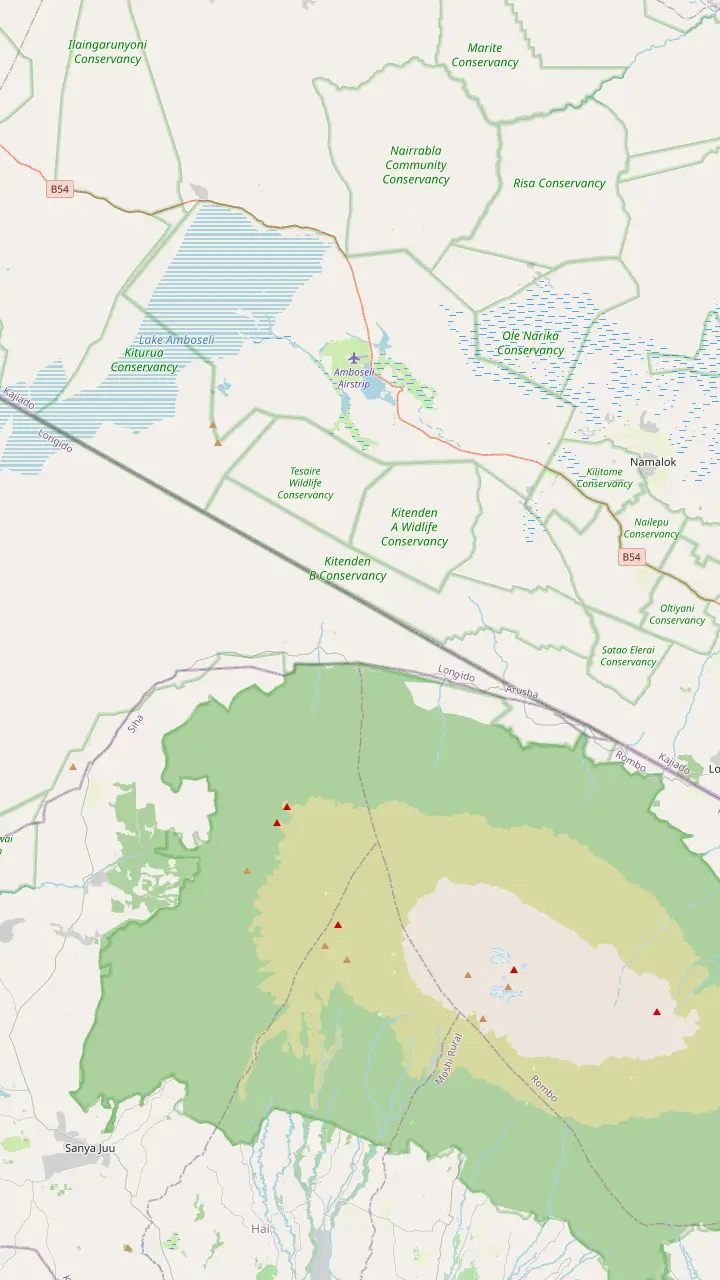
Amboseli National Park covers just 392 square kilometres, at the heart of a wider ecosystem of 8,000 square kilometres.
Google MapsThe lake basin is one of the park's listed attractions, and KWS says it attracts flamingoes.
Google MapsIremito is one of the three road gates of the park; the gate times are 6:00 AM to 6:00 PM unless you stay overnight.
Google MapsKimana Gate is also where the road from Tsavo West National Park enters Amboseli.
Google MapsKibo is the highest of the three volcanic peaks of Kilimanjaro, which UNESCO puts at 5,895 m and says is seen at its most famous from Amboseli.
Google Maps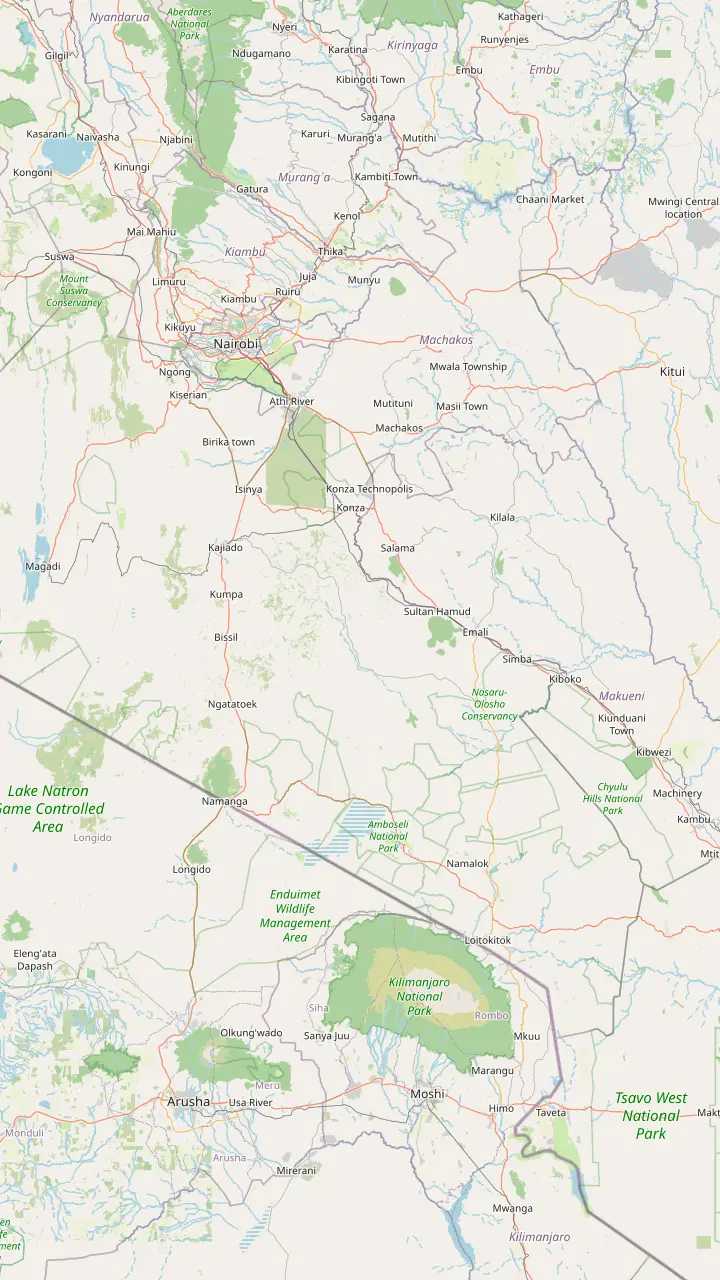
Nairobi is where the day tours start, and KWS measures its road routes to the park from here.
Google MapsAt Emali the road to Iremito Gate leaves the main Nairobi to Mombasa highway, 204 km into the journey by the KWS description.
Google MapsNamanga is the border town on the second route: the road is tarmac up to here and murram on to Meshanani Gate.
Google MapsKimana is the shopping centre where, by the KWS directions, the signs for Kimana Gate begin.
Google MapsLoitokitok gives its name to the road that leaves the Mombasa highway at Emali.
Google MapsIremito is one of the three road gates of the park; the gate times are 6:00 AM to 6:00 PM unless you stay overnight.
Google MapsKimana Gate is also where the road from Tsavo West National Park enters Amboseli.
Google MapsAmboseli National Park covers just 392 square kilometres, at the heart of a wider ecosystem of 8,000 square kilometres.
Google Maps© OpenStreetMap contributors · map data
A small park inside a vast ecosystem, with swamps fed by a mountain, the longest study of wild elephants and a famous view across the border.
Editorial team, amboselitour.quest · Updated November 24, 2026 · Allow 7 min
Facts at a glance
Amboseli National Park lies in southern Kenya beneath Kilimanjaro, which UNESCO places just inside the Kenyan side of the frontier.11 For readers who ask how big is Amboseli National Park, the answer comes in layers. The park itself covers just 392 square kilometres, but it sits at the heart of an ecosystem of 8,000 square kilometres in which wildlife moves across largely unfenced land in response to rainfall and food.1,2,12
The wider protected area is far bigger still. UNESCO lists the Amboseli Biosphere Reserve with a surface of 798,298 hectares, and it describes ecological zones of dry mountain forest, mountains, savannah rangelands, wetlands and swamps.13,11 The park is therefore the small, intensely visited core of a very large landscape, and the animals you see on a game drive may spend part of the year well outside its boundary.
The park's gates tell you how it is reached. KWS names the road entrances Iremito, Kimana and Meshanani, and says the park has a single tarmacked airstrip, the Kimana airstrip, which is 1.2 km long and used by light aircraft.14,15 The map above shows the gates and the lake basin, and the road guide of this site explains the routes from Nairobi in detail.
Facts and sources
| Fact | Figure | Source |
|---|---|---|
| Park area | 392 square kilometres1 | Amboseli Trust for Elephants |
| Whole ecosystem | 8,000 square kilometres2 | Amboseli Trust for Elephants |
| Biosphere reserve | 798,298 hectares13 | UNESCO |
| Gazetted | 19743 | Kenya Wildlife Service |
| Elephants | Some 1,5005 | Amboseli Trust for Elephants |
| Bird species | Over 40020 | Kenya Wildlife Service |
| Kilimanjaro summit | 5,895 m7 | UNESCO |
Each figure is stated by the named body; the park and the ecosystem are measured differently, so the areas are not interchangeable.1,13
The history of Amboseli National Park begins long before the park. The Amboseli Trust for Elephants says elephants and humans have shared the landscape for approximately 500 years, and the Maasai, whose traditional life is nomadic pastoralism, remain the original and predominant population in and around the reserve.10,9 The land was a pastoral landscape before it was a conservation area.
The legal step is dated by KWS, which records that the national park was gazetted in 1974.3 Protection then widened: in 1991 the region became a Man and the Biosphere Reserve, a joint UNESCO and Kenyan government label meant to conserve wildlife while supporting local people.4
A name that keeps appearing is Observation Hill. KWS also calls it Nomatior, notes the sweeping outlook it gives over the park and ties its heritage to the Ndorobo people.19 It is a reminder that several communities have used this landscape, and that the park is a layer on top of a much older human story rather than an empty wilderness.
The park's story
For centuries
The trust says elephants and humans have shared the landscape for approximately 500 years.10
1972
The Amboseli Elephant Research Project was formally established in 1972.16
1974
KWS records the gazetting of the park in 1974.3
1991
The region received its UNESCO biosphere reserve label, awarded with the Kenyan government.4
1997
The trust began paying livestock owners for losses to elephants.17
2000
The Amboseli Trust for Elephants became a legal entity in 2000.18
The secret of Amboseli is water. Rain is modest here, yet swamps nourished by the forested slopes of Kilimanjaro sustain a striking range of birds and mammals, the Amboseli Trust for Elephants explains.23 The mountain collects what the plains lack, and the swamps spread it across the dry floor, which is why green reed beds can stand against a brown horizon.
UNESCO lists the ecosystem as plains of basement rock, saline flats with freshwater swamps and Kilimanjaro's volcanic slopes, with vegetation that is mostly semi-arid.24 KWS adds the lake basin and says it attracts flamingoes, while its own list of habitats runs from open grass plains and acacia woodland to thorny bushland, swamps and marshes.21,25
Birdlife benefits from the mosaic. KWS puts the species count above 400, with 40 of them raptors, and ranks Amboseli among 60 Important Bird Areas in Kenya.20 The same mix of habitats supports a variety of large mammals: UNESCO names elephants, lions and giraffes, and reports that their numbers have increased while poaching cases have declined.26,27
Pick your interest
Say what interests you most and the part of the park that fits appears.
If I want elephants
The swamps
The trust counts some 1,500 elephants in the population.5
If I want the mountain view
An early start
UNESCO counts Amboseli as a classic viewpoint.8
If I want birds
The lake basin
KWS says the lake basin attracts flamingoes.21
If I want culture
A village visit
The home tour includes 2 hours at a traditional village.
If I want the science
A lecture
The trust offers lecture appointments through its Nairobi office.22
Pick a visit
Shortest
Elephants and a village
Most reviewed
Sunset and morning
Longest stay
A second night in the park
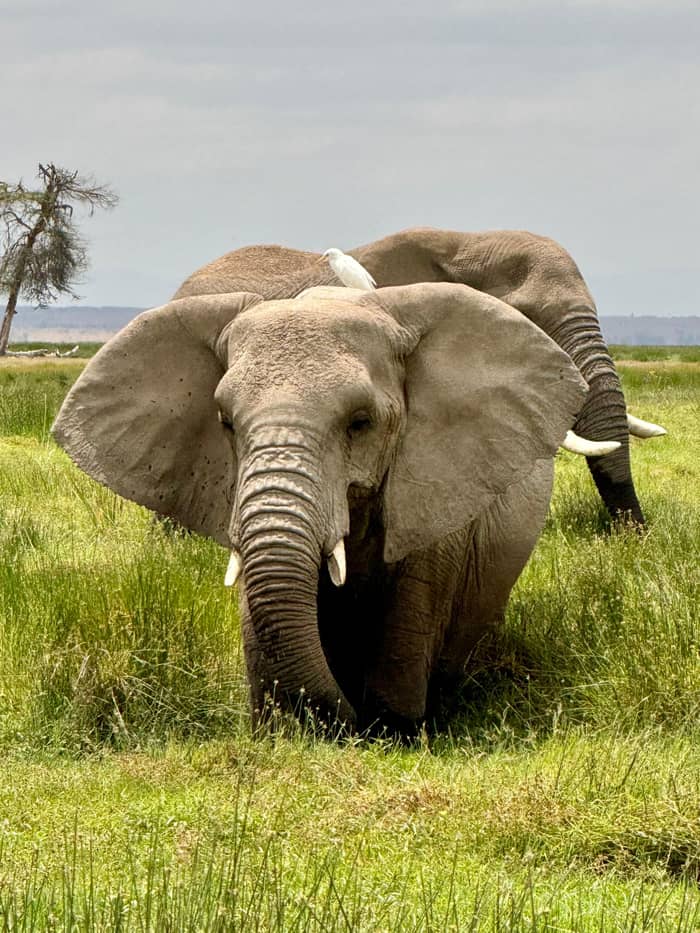
No other feature of the park is as famous as its elephants. Some 1,500 animals make up the population by the trust's count, dominating the ecosystem in biomass and visibility, and the trust says the herds have been documented since Cynthia Moss founded the research project in 1972.5,16 The project calls itself the longest study of wild elephants ever undertaken, covering more than 3,500 individuals.6
The research found a rare situation: a population that has lived a relatively undisturbed existence and grown steadily since the late 1970s in the absence of poaching and culling.40,41 The records show elephants living into their 70s, which allows scientists to study the whole sweep of a life.42 The trust was created as a legal entity in 2000 to formally enable the work.18
Some of the findings are charming. Playback experiments found that a female elephant can identify roughly 100 other females from their calls alone, and the data show that families led by older matriarchs rear more calves successfully.43,44 A drought in 2009 killed many of those leaders, a reminder that the herds depend on the old as well as the young.45 If you want to meet the researchers, note that their camp is a workplace, not open to casual drop-in visits.46
Compare the options
Enter your party size and compare each way of seeing the park.
Compare 4 alternatives
Enter your party size and compare each way of seeing the park.
≈
View≈
View≈
View≈
ViewConverted at the ECB reference rate, from-prices as listed by GetYourGuide. The precise amount is shown when you book.
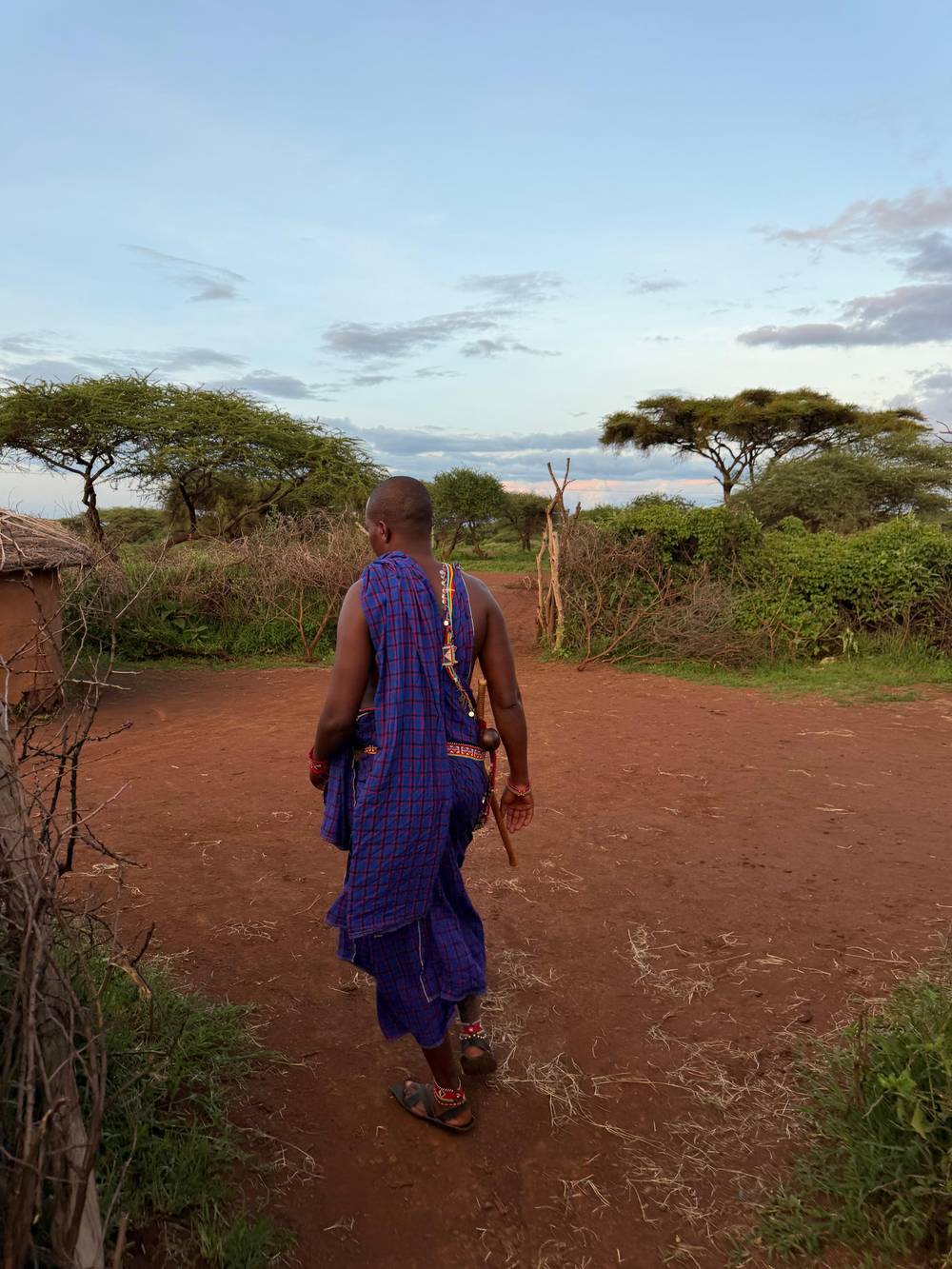
The Maasai are not a side note to Amboseli. UNESCO calls them the predominant and original population around the reserve, and it says tourism, a key economic activity, is increasingly embracing ecotourism.9 The trust notes that traditional pastoralism overlays the whole landscape on both sides of the border, and that this cultural identity has kept the land largely unfenced.47,12
Coexistence has a cost, and the trust has tried to share it. A consolation scheme started in 1997 pays livestock owners when an elephant kills animals on community land, and the trust says retaliatory spearing has all but ended since.17 UNESCO adds that community conservation areas such as Selengei now employ local people as scouts, sanctuary managers and guides.48
For visitors, the cultural side is a visit to a village. KWS lists manyatta and cultural centre visits that show a pastoral lifestyle as part of the offer of the park, and the home tour of this site adds a village stop of 2 hours with a dance show.49 Approach it as a meeting with a community, ask how the income is shared, and buy crafts directly if you wish to give something back.
Video
Fernweh Chronicles on YouTube · The clip loads only after you tap play.
Despite modest rainfall, a system of swamps fed by the Kilimanjaro mountain forest catchment supports a spectacular array of birds and mammals
Before you visit
Kilimanjaro is the reason for the postcards. UNESCO states that at 5,895 m it is the highest point in Africa, a volcanic massif whose main peaks are Kibo, Mawenzi and Shira, rising 4877 m above the surrounding plains.7,33,50 The summit is in Tanzania, and its national park joined the World Heritage List in 1987.51
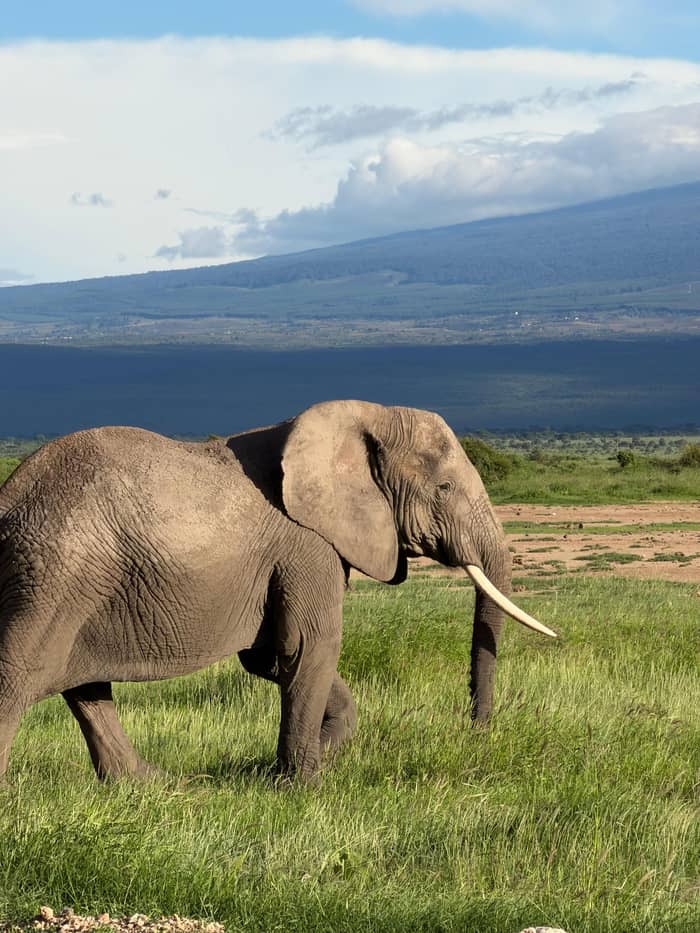
UNESCO adds that the outlooks from Arusha and Amboseli are the mountain's best known, and asks that those viewpoints be protected.8 The mountain's glaciers, it adds, are vulnerable to retreat, so a clear day over the swamps is a view with a clock on it.52 The pin on the map marks Kibo, the highest peak, a good way to see how far the mountain stands beyond the park.
No source can promise the summit on any given day, because cloud can cover a mountain of that size at any hour. Plan for an early start, keep your expectations flexible and let the elephants fill the foreground. A picture of a herd walking through green swamp with a faint white summit behind it is the defining image of Amboseli, and it works on a day when the top is only partly visible.
Most visitors see Amboseli from Nairobi on the 12-hour day tour of this site, which gives 3 hours to the drive in and 5 hours to the guided game drive and starts from $75. An overnight Landcruiser safari from $105 pairs an evening drive with a morning drive, and a longer safari from $480 runs 3 days with a village stop.
Entry is a separate cost in many listings. KWS gives non-resident adults, meaning foreigners on a valid visa, an entry rate of $90 and children $45, and East African citizen adults KES 1,500.34,53 A same-day visit starts at the 6:00 AM opening and ends at the 6:00 PM exit, and a night inside lifts the evening deadline.31
Plan to give the park a full morning at least. Bring binoculars, a camera, sunscreen, insect repellent and water, as KWS recommends, and keep to the rules about distance and roads so the animals stay calm.38,35 The trust runs a limited number of lecture appointments, arranged through its Nairobi office, for readers who want an hour with a researcher.22
FAQ
The KWS rate table gives non-resident children $45, and listings may or may not include the fee.34
Sources
Planning a day in Amboseli? Ask a real person here.